





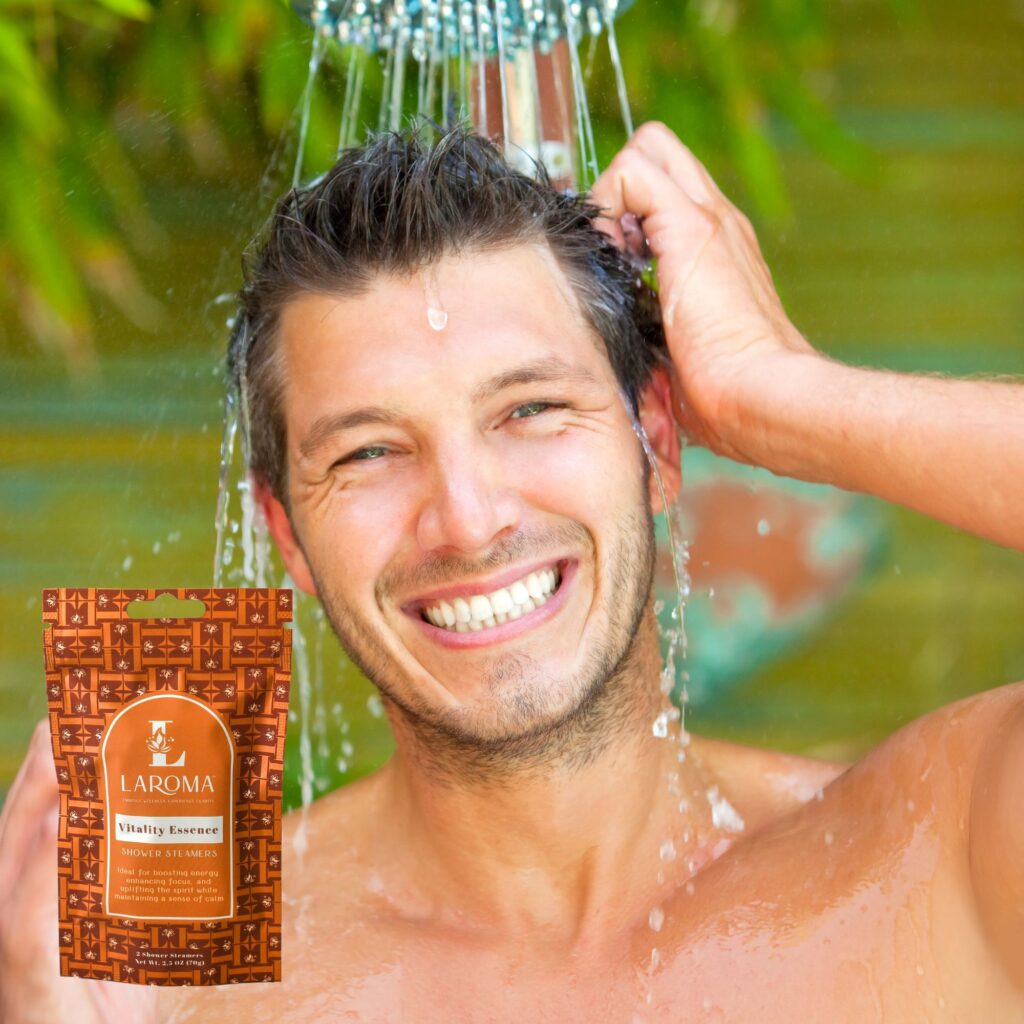
We’ve all been there: you catch a whiff of the unmistakable scent of an orange peel and suddenly feel a spark of energy, or you breathe in the scent of dried lavender and feel your shoulders finally drop away from your ears.
But is this just a “nice smell,” or is something deeper happening in your brain?
At Laroma, we don’t just choose oils because they smell pretty. We choose them because of the profound connection between your nose and your emotions. Let’s look at the “notes” behind why aromatherapy is such a powerful tool for your mental well-being.
The Direct Line to Your Brain
Most of our senses (like touch or sight) must be processed through various “checkpoints” in the brain before we react to them. Scent is different.
When you inhale the steam from a Laroma shower steamer, the scent molecules travel directly to your olfactory bulb. This bulb is part of the limbic system, which is a system of nerves and networks in the human brain. This is the same area that handles your emotions, your memories, and your “fight or flight” response.
Because this connection is so direct, scent can shift your mood faster than almost any other sensory input. It’s why a specific aroma can bring back a childhood memory in a split second, or why certain oils can tell your brain it’s time to relax.
The Chemistry of Calm (and Energy)
While the brain connection is fast, the plant chemistry is what does the heavy lifting. Essential oils contain natural compounds that interact with our body’s chemistry:
Creating Your Emotional Atmosphere
The true beauty of using essential oils in your bath or shower is that you aren’t just a passive observer—you are the curator of your environment.
By choosing specific Laroma blends, you are sending a signal to your limbic system:
Is it Placebo?
Critics sometimes ask if it’s “all in your head.” The answer is: Yes, and that’s exactly the point. Because your mood is in your head (specifically your limbic system), using a natural tool that communicates directly with that system is one of the most effective ways to manage daily stress. It isn’t a magic cure, but it is a scientifically backed way to support your emotional health.
Further Reading & Sources
At Laroma, we are committed to the intersection of nature and science. If you’d like to dive deeper into the clinical research regarding aromatherapy and the brain, we recommend these resources: